
Ensuring your savings are well protected is a key component of your over time financial security. In Argentina, other factors could arise to make investing more difficult, like inflation, the fluctuation of currency, interest rate shifts, and the uncertainty of the economy. This is particularly important to consider how and where you invest the money you have.

The best course of action will depend on your financial objectives, income, risk tolerance, and your time horizon for savings. You can take action to safeguard your finances by diversifying your portfolio, building an emergency fund, and regularly checking your portfolio.
Recognize the effect of inflation.
The power of cash to buy goods or services can diminish over time because of inflation. The rise in prices can be greater than the growth of savings, meaning that in the future the same quantity of money can purchase less goods and services.
That’s why it often isn’t the optimal approach to keep all your savings in cash in the long term. Take a look at your time frame and the savings/investment possibilities that can help you keep up with inflation.
Keep in mind, though, that investments can go up in value, but they can also go down, so you don’t need to take all of the risks to protect your savings.
Don’t miss this: Maintain an Emergency Fund
One of the most important priorities among your financial goals is to build up an emergency fund. It gives you peace of mind in case of unplanned costs like medical emergencies, sudden repairs or short-term income loss.
The objective is to save enough money to pay for a few months of living expenses at some time in the future. If that sounds like too much to ask for, then begin with a smaller goal and slowly work up to it.
Have emergency funds in a relatively secure and easily accessed account. Do not invest money you might need in the near future in volatile investments.
Diversify Your Savings
Diversification might help minimize risk from the dependence on a single asset, currency, financial institution or investment.
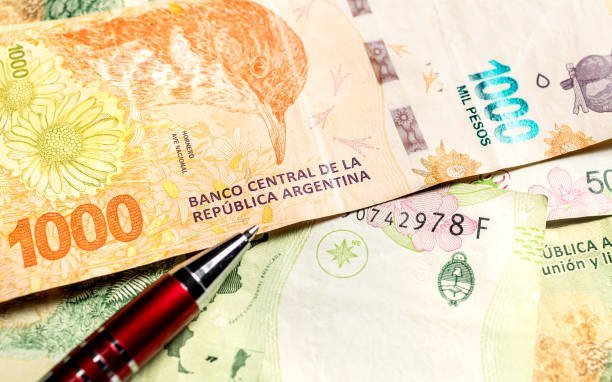
You might want to hold a mix of local-currency savings, foreign-currency exposure and diversified investments, depending on your situation.
This will vary depending on your risk appetite and objectives. Diversification does not guarantee profits, and it doesn’t eliminate risk because there is always risk involved with any asset, but it can help lower your reliance on any single asset’s performance.
Consider Currency Risk
For those who are saving in Argentina, currency movements are very significant. Someone who plans to make overseas purchases or relocate to another country may have different needs than someone whose primary plans are for expenses in Argentine pesos in the future.
Foreign-currency savings can be diversified but exchange rates can go up or down. When exchanging money, take into account transaction fees, exchange rates, account requirements, and your specific financial situation.
Choose Financial Institutions Carefully
The place that you store your money actually does matter. Opening an account or investing in a financial product, do your research and find out how the institution is regulated.
Look for any deposit protection schemes, account requirements, interest rates, withdrawal fees, and conditions.
Beware of a return that looks too good to be true. Be sure to know the hazards and requirements of that return.
Take care of high return offers
Offers that are offering high or guaranteed returns may seem appealing when there is a lot of economic uncertainty. But, there are great rewards for high potential investments with great risks.
Watch for investments that guarantee high returns, success, or steady returns that are far greater than normal. Know the provider, learn about the investment and never invest in something just because it’s said to be a “sure thing.”
If you don’t know about something you’re investing in, find some time to learn about it before putting your money into it.
Diversify Your Investments
Diversification of assets may be an effective strategy for long-term savings. These may be bonds, equities, funds or other regulated investment products, depending on your circumstances.
This is based on your age, financial objectives, investment horizon, and risk-tolerance.
A short-term emergency fund will require a different approach to saving than a long-term goal like saving for retirement.
Ensure that you have a handle on debts.
Earning and saving money is also about handling your debt. High-interest debt can make saving even more difficult; and if not paid-off, it can increase at a quick pace.
Look at the balances and interests due. Think of paying off high interest debt and having a sufficient emergency savings account.
Do not use expensive credit to buy items that you do not require, especially if you are already struggling with your debt.
Final Thoughts
Saving in Argentina isn’t enough; you need to protect your savings. With inflation, currency fluctuations, financial risks, and fluctuating economic conditions, it’s essential to consider both security and economic value.
Begin with an emergency fund, choose financial institutions with a good reputation, invest appropriately, make sure to understand currency risk, and take care to avoid investments that offer unrealistic returns. Above all, develop a financial plan to suit your own objectives, and don’t panic buy or sell based on the prevailing market sentiment.
By carefully planning and reviewing regularly, you can enhance your savings and financial stability in the long run.
FAQs
1.Why is it that holding cash is a good way to protect savings?
While cash may be beneficial in the short term, it could lose its value over time as a result of inflation.
2. How can I save more?
While diversification can help spread risks among assets and currencies or financial institutions, it cannot guarantee complete risk diversification.
3. What is an appropriate amount of an emergency fund?
The rule of thumb is several months of basic living costs, but begin with an amount that is in your budget.
4. Is it safe to invest in high return investments?
Not necessarily. The higher the potential return, the higher the risk, and so it is important to do research on any investment carefully.
5. What is the most frequent time I should check my savings plan?
Up to two times per year, a review of your finances will help ensure that your strategy remains aligned with your circumstances and goals.